
Why Everyone in Your Company Should Be Using AI at Work
AI isn’t about replacing people. It’s a force multiplier for thinking, communication, and speed. Here’s why general AI assistants belong in everyday work.
AIIT OPERATIONS & PROACTIVE MANAGEMENT
Brian McCoy, Onsight Technologies
4/27/20262 min read
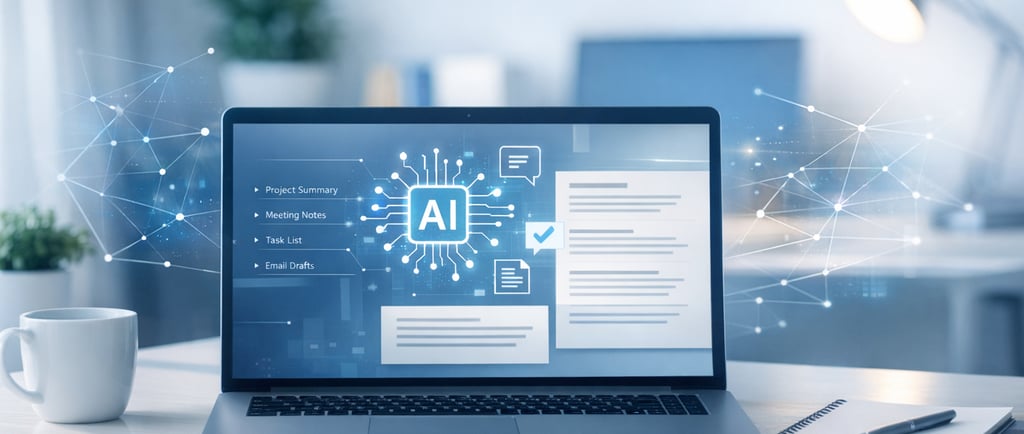
Why Everyone in Your Company Should Be Using AI at Work
What We Mean by “AI at Work”
To be clear, this isn’t about deploying internal AI agents, automating decision‑making, or connecting AI directly to company systems. For most organizations, that only makes sense once strong data foundations, governance, and clearly defined processes are in place.
What does make sense today is the use of general‑purpose AI assistants, such as:
Microsoft Copilot
ChatGPT
Gemini
Claude
These tools are designed to work alongside employees, not replace them. They help people think, draft, summarize, proof, and organize as they do their daily work — without becoming systems of record or autonomous decision‑makers.
Why AI Belongs in the Flow of Work
The real value of AI shows up when it’s used during work, not after it.
When employees can:
talk through a task with an AI assistant
draft and rewrite emails or documents
proof communications before sending
summarize meetings or work sessions
capture decisions and next steps
…work starts producing useful artifacts automatically.
This matters because most organizations struggle with undocumented processes, tribal knowledge, and SOPs that never quite get written. AI doesn’t solve that by replacing people — it helps by externalizing thinking as work happens.
Why Leadership Should Care
From a leadership perspective, AI used this way delivers real operational benefits:
Visibility without micromanagement
AI‑assisted work naturally produces summaries, notes, and timelines. This isn’t surveillance — it’s structured memory that helps leadership understand how work actually gets done.
Better documentation, without extra effort
Instead of asking staff to document processes after the fact, AI helps extract SOPs from real work. That makes documentation faster, more accurate, and far more likely to stay current.
Reduced risk when people leave or change roles
When decisions, context, and workflows are captured along the way, organizations rely less on tribal knowledge and individual heroes.
This Doesn’t Mean Everyone Uses AI the Same Way
Not every role needs AI in the same capacity.
But any role that involves:
writing
reading
planning
decision‑making
communication
…benefits from reduced friction between thinking and execution.
AI’s job isn’t to decide — it’s to remove unnecessary delay.
The Practical Takeaway
General AI assistants help people work better today.
Internal AI agents only make sense once the organization itself is ready.
For most companies, the smartest next step isn’t a big AI initiative — it’s encouraging employees to use the tools already available to think, communicate, and document more effectively.
Used correctly, AI doesn’t just make individuals faster.
It turns everyday work into institutional knowledge.
AI works best when it supports how people already work — not when it tries to replace it.
Support
Expert guidance for all your technology needs.
Solutions
© 2026 NP Cloud. All rights reserved.
Subscribe to our newsletter
Actionable IT & security insights